If you want to heat a pool, spa, or hot tub with a wood boiler, the right heat exchanger makes all the difference. It needs to move heat efficiently while standing up to your water conditions and plumbing setup.
This roundup of the best pool heat exchangers for wood boilers focuses on practical choices for different BTU needs, materials, and installation styles.
Best 10 Pool Heat Exchangers for Wood Boilers Picks for 2026
Heavy-Duty 300K Option
AB 300 kBTU Stainless Steel 316L Heat Exchanger
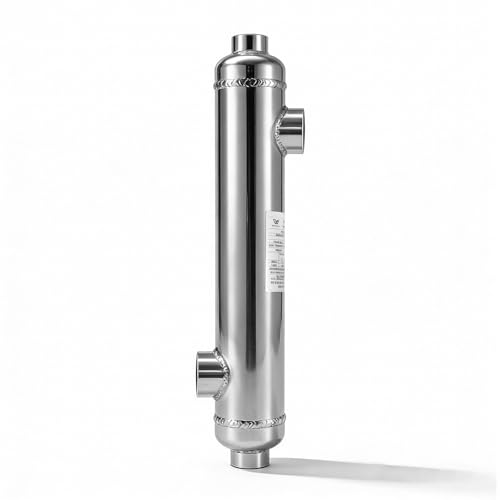
- 300 kBtu/hr rating for larger pool heating needs
- 316L stainless steel for chemically treated water
- 2" and 1 1/2" FPT ports for boiler-side setup
Best For: Large pools, spas, and outdoor wood boiler systems
Salt-Water Ready Choice
240,000 BTU Cupro Nickel Salt Water Heat Exchanger

- 240,000 BTU output for pool heating
- Cupro nickel build for salt-water pool systems
- Recommended for pools with salt water chlorine generators
Best For: Salt-water pools with chlorine generators
Compact Same-Side Pick
AB 155kBtu Stainless Steel 316L Same-Side Heat Exchanger

- 155 kBtu/hr rating for smaller heating needs
- Same-side 1 1/2" and 1" FPT plumbing
- 316L stainless steel with 1-year warranty
Best For: Smaller pools, spas, and same-side plumbing layouts
High-Output Salt-Water Option
400,000 BTU Cupro Nickel Salt Water Heat Exchanger
- 400,000 BTU output for high-capacity heating
- Cupro nickel construction for salt-water pools
- Recommended for pools with salt water chlorine generators
Best For: Large salt-water pools needing maximum output
High-Capacity Pick
400MF 120KW Same-Side 304 Stainless Exchanger

- 120KW heating capacity for fast temperature rise
- 304 stainless steel for durability and corrosion resistance
- 1" + 2" FPT same-side ports simplify installation
Best For: Large pool, spa, or solar setups needing a durable high-output exchanger
Classic Wood-Boiler Option
210K BTU 316 Stainless Shell-and-Tube Exchanger
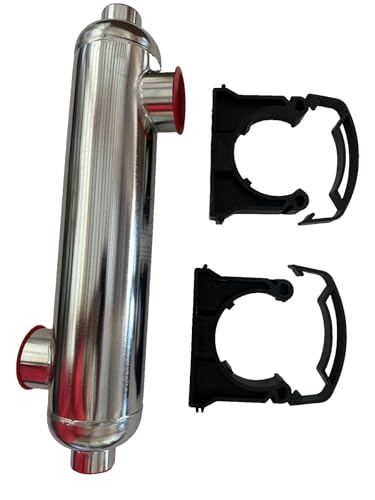
- Up to 210,000 BTU output for wood-boiler use
- 316 stainless steel for chlorinated systems
- Opposite-side ports improve heat transfer
Best For: Pools up to 16,000 gallons needing a proven wood-boiler exchanger
Compact Utility Pick
200kBtu Same-Side Port Stainless Exchanger

- Compatible with boilers, heat pumps, geothermal, and solar
- Straight tubes support low pressure loss
- User-installable with vertical or horizontal placement
Best For: Compact, flexible heating setups that need easy installation
Compact 155K BTU Option
155K BTU Stainless Steel Heat Exchanger

- Up to 155,000 BTU capacity
- 316 stainless steel for chlorinated systems
- Sized for pools up to 11,000 gallons
Best For: Smaller pools needing a durable wood-boiler heat exchanger
High-Capacity 300K BTU Choice
300K BTU Stainless Steel Heat Exchanger

- Up to 300,000 BTU capacity
- 316 stainless steel for chlorinated systems
- Sized for pools up to 20,000 gallons
Best For: Large pools that need maximum heating capacity
Hot Tub-Sized 85K BTU Pick
85K BTU Pool/Hot Tub Heat Exchanger

- Up to 85,000 BTU capacity
- 316 stainless steel for chlorinated systems
- Sized for hot tubs up to 6,000 gallons
Best For: Hot tubs and spas needing a smaller wood-boiler exchanger
Heavy-Duty 300K Option – AB 300 kBTU Stainless Steel 316L Heat Exchanger
If you need pool heat exchangers for wood boilers that can handle a larger swimming pool, this AB 300 kBTU model is built for high-output heating and chemical-treated water applications. Its 316L stainless steel construction and 300 kBtu/hr rating make it a practical match for outdoor wood boilers, spas, and pool heating setups.
Best For: Larger pools, spas, hot tubs, and hydronic heating systems that need a corrosion-resistant exchanger.
Pros:
- 300 kBtu/hr heating capacity, rated up to 23,800 gallons in fresh pool use
- 316L stainless steel construction for chemical-treated pool, spa, and hot tub water
- 2" FPT opposite ports for pool water and 1 1/2" FPT for hot water
- Suitable for pool/spa heating, outdoor wood furnaces, hydronic heating, and snow melting
Cons:
- Higher-capacity unit may be more than needed for smaller pools
- Best fit is for systems that can use its specific 2" and 1 1/2" port sizes
- Fresh-pool capacity figure is based on a 60°C temperature difference
This is the right kind of pick when output and corrosion resistance matter most. For buyers comparing pool heat exchangers for wood boilers, it stands out as a versatile, heavy-duty option with broad heating-system compatibility.
Salt-Water Ready Choice – 240,000 BTU Cupro Nickel Salt Water Heat Exchanger
For pool heat exchangers for wood boilers in salt-water setups, this 240,000 BTU cupro nickel model is positioned for pools with salt water chlorine generators. It is a straightforward option if your priority is compatibility with salt-treated pool water rather than a long list of extra features.
Best For: Salt-water pools using chlorine generators and wood boiler heating systems.
Pros:
- 240,000 BTU capacity for pool heating applications
- Cupro nickel construction suited to salt-water pool use
- Specifically recommended for pools with salt water chlorine generators
- Works as an outdoor wood boiler heat exchanger
Cons:
- Limited detail provided on port sizes and installation layout
- No stated gallon capacity in the supplied notes
- Fewer specification details than some other models in the lineup
This model makes sense when salt-water compatibility is the main requirement. If your system uses a chlorine generator, the cupro nickel build is the key selling point to focus on.
Compact Same-Side Pick – AB 155kBtu Stainless Steel 316L Same-Side Heat Exchanger
If you are comparing pool heat exchangers for wood boilers for a smaller installation, this 155kBtu AB unit offers a compact stainless steel option with same-side ports. It is designed for pool, spa, hot tub, and hydronic heating use, and its 316L stainless steel construction is aimed at chemically treated water.
Best For: Smaller pools, spas, and hot tubs that need same-side port plumbing.
Pros:
- 155 kBtu/hr heating capacity, rated up to 11,900 gallons in fresh pool use
- 316L stainless steel construction for anti-corrosion performance
- Same-side 1 1/2" FPT pool-water ports and 1" FPT hot-water ports
- Includes a 1-year warranty from the purchase date
Cons:
- Lower capacity than larger 300k and 400k options
- Same-side port configuration may not suit every plumbing layout
- Gallons rating is based on a 60°C temperature difference
This is a practical choice when you want a smaller, corrosion-resistant exchanger with an easier same-side connection layout. It is a sensible fit for moderate heating needs where the larger units would be unnecessary.
High-Output Salt-Water Option – 400,000 BTU Cupro Nickel Salt Water Heat Exchanger
Among pool heat exchangers for wood boilers, this 400,000 BTU cupro nickel model is the highest-output option in the set and is recommended for pools with salt water chlorine generators. If you need more heating capacity and want a unit intended for salt-water use, this is the most powerful choice here.
Best For: Large salt-water pools that need a high-output wood boiler heat exchanger.
Pros:
- 400,000 BTU capacity for strong heating output
- Cupro nickel build recommended for salt water chlorine generator pools
- Designed for outdoor wood boiler use
- Simple product profile focused on high-capacity pool heating
Cons:
- No gallon capacity listed in the supplied notes
- Limited detail on port configuration and installation requirements
- May be more capacity than smaller pools need
If maximum BTU output is the priority, this model is the standout of the group. Its salt-water recommendation and high rating make it a strong fit for larger pool-heating projects.
High-Capacity Pick – 400MF 120KW Same-Side 304 Stainless Exchanger
If you’re comparing pool heat exchangers for wood boilers and want a straightforward, high-output option, this 120KW model is built for fast water heating in pools, spas, and hot tubs. Its 304 stainless steel construction is meant to resist corrosion and rust, while the same-side 1″ + 2″ FPT setup keeps the installation side simple.
Best For: Buyers wanting a durable, high-capacity exchanger for pool, spa, or solar use with easy installation.
Pros:
- 120KW output is designed to raise water temperature quickly.
- 304 stainless steel construction aims for durability and corrosion resistance.
- 1″ + 2″ FPT same-side interface is intended to simplify hookup.
- Pure physical heat transfer means no electrical connection is needed.
Cons:
- Large capacity may be more than needed for smaller setups.
- Same-side outlet layout may not suit every plumbing configuration.
- Specific pool sizing guidance is not provided in the notes.
This is a practical choice if your priority is strong heating performance and a stainless build for outdoor water applications. The tradeoff is that its size and output may be better matched to larger or more demanding systems.
Classic Wood-Boiler Option – 210K BTU 316 Stainless Shell-and-Tube Exchanger
For shoppers looking at pool heat exchangers for wood boilers, this 210,000 BTU shell-and-tube model keeps things simple and purpose-built. It’s designed for outdoor wood boiler and solar applications, uses 316 stainless steel, and features ports on opposite sides for better heat transfer.
Best For: Pool owners who want a proven wood-boiler compatible exchanger for systems up to 16,000 gallons.
Pros:
- Rated up to 210,000 BTU for strong heat transfer potential.
- 316 stainless steel is intended for chlorinated systems.
- Opposite-side ports are designed for better heat transfer.
- Notes specify suitability for pools up to 16,000 US gallons.
Cons:
- Heavier, older-style design may not be as compact as some alternatives.
- No detailed installation accessories are listed in the notes.
- Capacity may be unnecessary for smaller pools or spas.
If you want a straightforward exchanger with clear pool-size guidance and stainless construction, this one covers the basics well. It’s especially appealing when compatibility with chlorinated systems and wood boiler use matter more than extra features.
Compact Utility Pick – 200kBtu Same-Side Port Stainless Exchanger
This compact option is a strong fit if you’re comparing pool heat exchangers for wood boilers and want a unit that also works with boilers, heat pumps, geothermal, or solar systems. The notes highlight straight tubes for low pressure loss, corrugated flow for better heat exchange, and a user-installable design with 1.5″ MPT and FPT connections.
Best For: Buyers who want a versatile, compact exchanger for mixed heating setups and easy installation.
Pros:
- Compatible with boiler, heat pump, geothermal, and solar heating systems.
- Straight tubes are designed for low pressure loss and energy savings.
- Corrugated tubes help promote turbulent flow and reduce deposits.
- User-installable with vertical or horizontal placement options.
Cons:
- Same-side port layout may limit plumbing flexibility in some installs.
- Notes emphasize compact size rather than pool volume capacity.
- Product notes contain mixed material references, so buyers may want to verify the exact build before ordering.
Overall, this is a versatile, installation-friendly exchanger for buyers who value compact dimensions and broad heating compatibility. It makes the most sense when you want efficient transfer and flexible positioning in a smaller footprint.
Compact 155K BTU Option – 155K BTU Stainless Steel Heat Exchanger
If you need one of the more compact pool heat exchangers for wood boilers, this 155,000 BTU stainless steel model is aimed at smaller pool setups and chlorinated systems. It uses a shell-and-tube design with 316 stainless steel and has ports on opposite sides for better heat transfer.
Best For: Smaller pools up to 11,000 gallons that need a stainless steel exchanger for outdoor wood boiler or solar use.
Pros:
- Up to 155,000 BTU output
- 316 stainless steel construction for chlorinated systems
- Opposite-side ports support better heat transfer
- Rated for pools up to 11,000 US gallons
Cons:
- Lower capacity than larger models in this lineup
- Not intended for very large pool volumes
Overall, this is a straightforward choice if your priority is a durable, stainless unit sized for moderate pool capacity. It fits the same outdoor wood boiler use case as the larger models, but with a more restrained BTU rating.
High-Capacity 300K BTU Choice – 300K BTU Stainless Steel Heat Exchanger
Among pool heat exchangers for wood boilers, this 300,000 BTU model stands out for larger water volumes and higher heat transfer potential. It is built from 316 stainless steel, designed for chlorinated systems, and uses ports on the same side for better heat transfer.
Best For: Larger pools up to 20,000 gallons that need the highest BTU capacity in this group.
Pros:
- Up to 300,000 BTU output
- 316 stainless steel construction
- Designed for chlorinated systems
- Rated for pools up to 20,000 US gallons
Cons:
- Bigger capacity than smaller pools may need
- Same-side ports may not suit every installation layout
If you want the strongest heating capacity in this lineup, this model is the obvious pick. Its larger BTU rating and pool-size coverage make it better suited to bigger residential or commercial water loads.
Hot Tub-Sized 85K BTU Pick – 85K BTU Pool/Hot Tub Heat Exchanger
If you are comparing pool heat exchangers for wood boilers for a spa or smaller water volume, this 85,000 BTU stainless steel unit is the most compact option here. It is marketed as a pool/hot tub exchanger, uses a shell-and-tube 316 stainless steel build, and is designed for chlorinated systems.
Best For: Hot tubs, spas, and jacuzzi-style setups up to 6,000 gallons.
Pros:
- 85,000 BTU output for smaller heating loads
- 316 stainless steel construction
- Designed for chlorinated systems
- Built for hot tubs/spas up to 6,000 US gallons
Cons:
- Lower BTU rating than the two larger pool models
- Not intended for bigger pool capacities
This is the best fit when your project is more spa-sized than pool-sized. The lower capacity is offset by a format that matches hot tubs and similar smaller installations.
How We Picked These Pool Heat Exchangers for Wood Boilers
We looked at heating capacity, construction material, port configuration, and compatibility with common pool and boiler setups. The strongest options balance real-world BTU output with durable materials that fit your water chemistry and installation goals.
Quick Comparison
In simple terms: smaller units work best for spas and compact systems, mid-range models suit many residential pools, and higher-output exchangers are better for larger water volumes or faster recovery. Same-side and opposite-port designs matter as much as raw BTU rating because they affect routing, space requirements, and plumbing simplicity.
Key Buying Factors for Pool Heat Exchangers for Wood Boilers
BTU Capacity
Choose capacity based on pool size, desired heat-up time, and how much boiler output you can deliver consistently. Oversizing can be helpful for faster recovery, but only if the boiler loop and plumbing are matched correctly.
Material Type
Stainless steel models are a common pick for general use, while cupro-nickel options are often preferred for salt water or more demanding water conditions. If your system uses chlorinated water, verify the exchanger is rated for that application.
Port Layout and Size
Port placement affects installation flexibility. Same-side ports can simplify some layouts, while opposite ports may work better when you need cleaner routing or a different flow path. Always confirm the fitting sizes before buying.
Water Chemistry and Compatibility
Pool Heat Exchangers for Wood Boilers must match the pool side water conditions. Salt water, chlorinated water, spa water, and solar-assisted systems may all have different compatibility needs, so check manufacturer specs carefully.
Who Should Buy Which Pool Heat Exchangers for Wood Boilers?
Choose a compact 85K BTU unit for hot tubs or smaller spas, a mid-range 155K to 240K BTU model for many residential pools, and a 300K to 400K BTU exchanger if you need faster heating or are working with a larger pool volume. If corrosion resistance is a priority, favor cupro-nickel. If you want a more economical general-purpose option, stainless steel is usually the better starting point.
For the best results, match the exchanger to your boiler output, pool size, plumbing layout, and water type rather than shopping by BTU alone.
