Choosing a tankless water heater for simultaneous showers means looking beyond “endless hot water” marketing. The real question is whether the unit can deliver enough flow and temperature rise for your home’s peak demand.
Below, we focus on the most important sizing, fuel, and installation factors so you can narrow the list quickly and avoid buying a unit that works on paper but disappoints during morning rush hour.
Best 10 Tankless Water Heater for Simultaneous Showers Picks for 2026
Best for 2–3 Bath Homes
WINTEMP 27kW Whole House Tankless Heater

- Up to 6.5 GPM for overlapping shower use
- Space-saving wall-mounted design
- WiFi control with ETL-certified safety features
Best For: Homes with 2–3 bathrooms and the electrical capacity for a high-output electric tankless unit.
Best for Small Homes
EcoSmart ECO 11 Electric Tankless Water Heater

- Compact wall-mounted design saves space.
- Self-modulating control helps keep temperatures steady.
- Works best for one shower, or two in warmer climates.
Best For: Single-bath homes and warm-climate buyers with modest hot-water demand.
Best for High-Flow Homes
A. O. Smith 10 GPM Tankless Water Heater

- 10.0 GPM output for multi-fixture demand
- 199,000 BTU and copper heat exchanger for stable heat
- X3 Scale Prevention plus advanced diagnostics
Best For: Larger homes needing strong, steady hot water for multiple showers and fixtures.
Best for Easy Temp Control
Rheem 18kW 240V Tankless Electric Heater
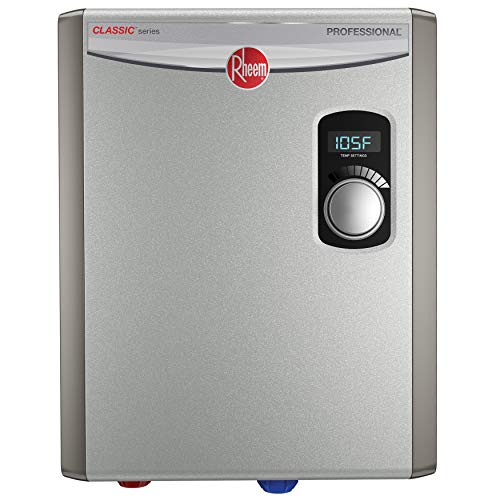
- Digital thermostatic control with LED display
- Self-modulating power for steadier demand handling
- Up to 4.4 GPM with simple bottom NPT connections
Best For: Moderate-demand households that want precise temperature control and simple installation.
Best for Large Homes
A. O. Smith ATI-540P-N Tankless Water Heater

- Up to 10.0 GPM for multi-shower households
- Integrated recirculation pump reduces hot-water wait time
- Commercial-grade build with 15-year heat exchanger warranty
Best For: Large households needing strong hot-water output for multiple bathrooms.
Best for 1–2 Point Use
ORBEK 14kW Tankless Water Heater

- Up to 3.38 GPM for compact hot-water demand
- Stable self-modulating temperature control
- ETL-certified safety features and space-saving design
Best For: Homeowners needing efficient hot water for two fixtures or a bathroom-kitchen setup.
Best for 2 Showers Plus a Sink
APUS 4.42 GPM Natural Gas Heater
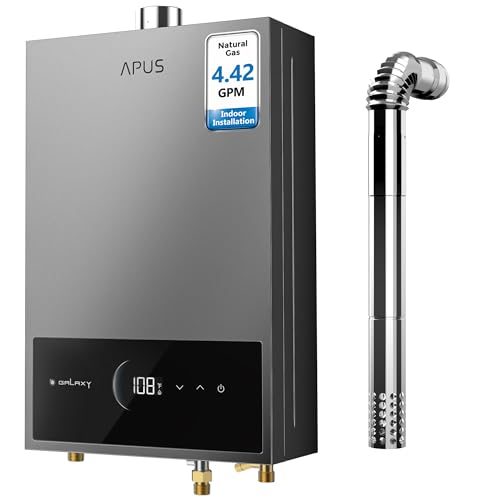
- Supports two showers plus an extra sink at once
- Steady temperature control within ±1°F
- Compact indoor unit with quiet operation
Best For: Households that need reliable multi-fixture hot water from a compact natural gas unit.
Best for 2–3 Fixtures
Ranein 18kW 240V Tankless Water Heater

- Up to 4.3 GPM for 2–3 outlets at once
- Compact wall-mounted design saves space
- CSA certified with built-in safety protection
Best For: Households wanting steady hot water for a couple of showers plus light whole-home use.
Best Outdoor Propane Option
A. O. Smith ATO-140H 6.6 GPM Tankless

- 6.6 GPM flow for higher-demand use
- Outdoor wall-mount design saves space
- Condensing, Ultra-Low NOx efficiency
Best For: Propane households that want an outdoor tankless system for multiple fixtures running at once.
Best for Under-Sink Use
Tankless Water Heater Electric 110V, 3000W Instant Water Heater

- Compact point-of-use design for sinks and small spaces
- Fast heating with LED display and simple temperature control
- Safety protections include leak, dry-boil, and overheating shutoff
Best For: Homeowners needing quick hot water at a sink, RV, or small bathroom fixture.
Best for 2–3 Bath Homes – WINTEMP 27kW Whole House Tankless Heater
If you need a tankless water heater for simultaneous showers, the WINTEMP 27kW is built for whole-house demand in smaller to mid-size homes, especially in mild to moderate climates. Its 6.5 GPM max flow and self-modulating output help keep water temperature steadier when multiple fixtures are running, but it does require substantial electrical capacity and professional installation.
Best For: Homes with 2–3 bathrooms that want endless hot water for back-to-back or overlapping showers, and already have the electrical service to support a high-powered electric unit.
Pros:
- Up to 6.5 GPM and self-modulating control for more stable shower temperature
- Compact wall-mounted design saves space versus a storage tank
- WiFi control and LED temperature display make adjustments easier
- ETL certified with leak, overheat, and dry-fire protection
Cons:
- Requires a 200A household service recommendation and significant breaker/wiring setup
- Not ideal for colder climates or very high simultaneous demand beyond its capacity
- May need an electrician to verify compatibility before purchase
As a tankless water heater for simultaneous showers, this model makes the most sense when you want whole-house convenience without a bulky tank, but only if your electrical system can truly support it. It’s a strong fit for buyers prioritizing compact design, app control, and steady daily shower performance over easy retrofit installation.
Best for Small Homes – EcoSmart ECO 11 Electric Tankless Water Heater
If you need a compact tankless water heater for simultaneous showers, the EcoSmart ECO 11 is worth a close look for small homes, apartments, or point-of-use installs. Its 13kW output and self-modulating control help keep temperatures steady, but real-world performance depends heavily on incoming water temperature and flow rate.
Best For: Single-bath homes, low-flow setups, and warm-climate buyers who want space-saving on-demand hot water.
Pros:
- Compact wall-mounted design saves a lot of space.
- Self-modulating technology helps maintain consistent output.
- Can handle one shower well, and up to two in warmer climates.
- High efficiency with on-demand heating only.
Cons:
- Not a strong pick for cold-climate simultaneous showers.
- Requires a 240V electrical setup and significant amperage.
- Best performance is limited by inlet water temperature and flow.
For shoppers comparing a tankless water heater for simultaneous showers, this model makes the most sense when demand is modest and climate is favorable. It’s a practical, efficient option, but households with two high-flow showers running at once should size up carefully.
Best for High-Flow Homes – A. O. Smith 10 GPM Tankless Water Heater
If you need a tankless water heater for simultaneous showers, this A. O. Smith unit is built around high flow and fast recovery. Its 10.0 GPM capacity, 199,000 BTU output, and copper heat exchanger make it a strong fit for larger homes that want steady hot water at more than one fixture at a time.
Best For: Households that want strong whole-home hot water performance for multiple bathrooms and higher-demand use.
Pros:
- Up to 10.0 GPM supports multi-fixture hot water demand.
- 199,000 BTU output helps maintain temperature under load.
- X3 Scale Prevention and integrated diagnostics add long-term reliability.
- Convertible design works with natural gas or propane.
Cons:
- Indoor direct-vent installation is more involved than a simple swap.
- High-capacity performance may be overkill for smaller households.
- Requires proper gas and venting setup to reach full output.
For buyers comparing a tankless water heater for simultaneous showers, this model stands out for capacity, temperature stability, and durability. It is a practical choice when the priority is keeping multiple showers comfortable without the flow drop-offs that smaller units can struggle with.
Best for Easy Temp Control – Rheem 18kW 240V Tankless Electric Heater
If you want a compact electric unit that is straightforward to install and easy to dial in, the Rheem 18kW 240V is a practical option to consider. It offers digital temperature control, self-modulation, and up to 4.4 GPM, making it a solid fit for lighter demand or a tankless water heater for simultaneous showers in smaller homes where water usage is managed carefully.
Best For: Homeowners who want a simple electric tankless heater with precise digital controls and dependable hot water for moderate household demand.
Pros:
- External digital thermostatic control with LED display for easy temperature adjustments
- Self-modulating design helps match power output to hot water demand
- Up to 4.4 GPM and dual copper heating elements for efficient performance
- Bottom 3/4-inch NPT connections make replacement and installation simpler
Cons:
- 18kW output may be limiting for larger homes with heavy simultaneous use
- Electric setup may require sufficient panel capacity
- Best performance depends on groundwater temperature and flow rate
Overall, this Rheem model is a good fit if you value easy temperature control and straightforward installation more than maximum output. It can work as a tankless water heater for simultaneous showers in the right conditions, but larger households may need a higher-capacity unit.
Best for Large Homes – A. O. Smith ATI-540P-N Tankless Water Heater
If you need a tankless water heater for simultaneous showers, this A. O. Smith model is built for higher-demand homes. With up to 10 GPM, it’s sized to support 3 to 4 bathrooms in the right climate, while the integrated recirculation pump helps cut the wait for hot water at the tap.
Best For: Larger households that want strong hot-water delivery, faster recirculation, and a gas-powered unit designed for multi-bathroom use.
Pros:
- Up to 10.0 GPM, making it a strong fit for simultaneous showers
- Integrated recirculation pump helps deliver hot water faster
- Commercial-grade stainless steel construction with long warranty coverage
- Indoor condensing design with safety controls and pro-install focus
Cons:
- Professional installation is recommended
- Recirculation may require a separate bypass valve
- Performance can vary by climate and plumbing setup
For buyers comparing a tankless water heater for simultaneous showers, this A. O. Smith unit stands out for capacity, recirculation, and durability rather than compact simplicity. It’s a good match when your priority is keeping multiple bathrooms supplied without the hot-water lag.
Best for 1–2 Point Use – ORBEK 14kW Tankless Water Heater
If you need a tankless water heater for simultaneous showers in a smaller home or as a point-of-use upgrade, the ORBEK 14kW unit is built for efficiency rather than whole-house heavy lifting. It delivers up to 3.38 GPM, fast heat-up, and stable temperature control, making it a practical pick for two adjacent fixtures or a bathroom-and-kitchen setup when your electrical service can support it.
Best For: Homes that want compact, efficient hot water for 1–2 points of use, especially bathroom and kitchen installs.
Pros:
- Max 3.38 GPM supports 1–2 point-of-use applications.
- Self-modulating heating helps keep water temperature steady within 1°F.
- ETL certified with leakage, dry-heating, over-temperature, and lightning protection.
- Compact cabinet saves space and fits tighter installation areas.
Cons:
- Requires a 240V/60A breaker and at least 150A panel capacity.
- Not the strongest choice for true whole-home, multi-shower demand.
For buyers comparing a tankless water heater for simultaneous showers, this ORBEK model makes more sense for paired fixtures than for several showers running at once. It’s a solid fit if your priority is compact size, fast hot water, and dependable temperature control, but electrical capacity will be the deciding factor.
Best for 2 Showers Plus a Sink – APUS 4.42 GPM Natural Gas Heater
If you need a tankless water heater for simultaneous showers, the APUS natural gas model is built for higher-demand households. Its 95,000 BTU output and 4.42 GPM flow rate are aimed at keeping two showers and a sink supplied with steady hot water, while the compact wall-mounted design helps save space indoors.
Best For: Homes that want strong whole-house hot water performance for two showers running at once, plus an extra fixture.
Pros:
- 4.42 GPM and 95,000 BTU output support multi-fixture hot water use.
- Smart temperature control helps keep water steady within ±1°F.
- Compact indoor design with quiet operation and space-saving footprint.
- 85%+ efficiency and copper heat exchangers help improve energy use.
Cons:
- Natural gas setup limits it to homes with the right gas infrastructure.
- May still be undersized for very large homes with multiple showers plus heavy appliance use.
Overall, this is a practical choice if you want a tankless water heater for simultaneous showers without giving up a compact indoor install. It stands out for steady temperature control and enough flow for a busy morning routine, though buyers should match the sizing to their peak demand before ordering.
Best for 2–3 Fixtures – Ranein 18kW 240V Tankless Water Heater
If you need a tankless water heater for simultaneous showers, the Ranein 18kW model is built for light whole-house demand rather than one-fixture use. Its 4.3 GPM rating and 99% thermal efficiency can handle 2–3 outlets at once, while the compact wall-mounted design keeps installation footprint small.
Best For: Homes that want steady hot water for a couple of showers or mixed bathroom/kitchen use, and have the electrical capacity for a dual-circuit 240V install.
Pros:
- Supports 2–3 household outlets simultaneously with up to 4.3 GPM
- Compact, space-saving design with LED temperature display and control knob
- CSA certified with overheat, leakage, and moisture protection
- On-demand operation helps cut standby energy loss
Cons:
- Requires two dedicated 240V circuits, so installation is more demanding
- May be undersized for large homes with multiple high-flow showers running at once
- Electric service capacity should be verified before buying
For buyers comparing a tankless water heater for simultaneous showers, this Ranein unit makes the most sense in smaller households that want reliable, endless hot water without committing to a bulky tank. The tradeoff is that its performance depends heavily on proper electrical setup and realistic flow expectations.
Best Outdoor Propane Option – A. O. Smith ATO-140H 6.6 GPM Tankless
If you need a tankless water heater for simultaneous showers and want an outdoor propane unit with strong flow, the A. O. Smith ProLine XE ATO-140H is built for the job. Its 6.6 GPM output, 120,000 BTU burner, and condensing design make it a practical fit for medium households that need steady hot water without dedicating indoor space to the heater.
Best For: Homes using propane that want an outdoor-mounted tankless system with enough capacity for multiple fixtures running at once.
Pros:
- Up to 6.6 GPM supports higher-demand hot water use
- Outdoor, wall-mount design saves indoor space
- Condensing efficiency with Ultra-Low NOx performance
- 15-year limited heat exchanger warranty in residential use
Cons:
- Propane-only model limits fuel flexibility
- May still be undersized for very large homes with several simultaneous showers
- Professional installation is typically the realistic path
This is a strong pick if you want a tankless water heater for simultaneous showers and prefer an outdoor propane setup that balances capacity, efficiency, and space savings. It is especially appealing when you want reliable everyday performance without sacrificing indoor storage.
Best for Under-Sink Use – Tankless Water Heater Electric 110V, 3000W Instant Water Heater
This compact 110V tankless unit is a practical pick if you want quick point-of-use hot water for sinks, but it is not a tankless water heater for simultaneous showers. Its 3000W element is designed for small, single-fixture demand, with temperature rising based on flow rate and a clear digital display for simple operation.
Best For: Kitchens, bathrooms, RVs, and other under-sink setups where you need fast hot water in a small footprint.
Pros:
- Compact under-sink design fits tight spaces well
- Fast on-demand heating with LED temperature display
- Multiple safety features, including dry-boil and leak protection
- Works as a point-of-use heater for sinks and similar low-flow needs
Cons:
- Not suitable for showers, especially if you need higher GPM
- Requires careful vertical installation and proper electrical setup
- Best for single fixture use, not whole-home demand
For buyers comparing options for a tankless water heater for simultaneous showers, this model falls on the point-of-use side rather than the high-flow side. It makes more sense as a compact sink heater than as a multi-shower solution.
How We Picked the Best Tankless Water Heater for Simultaneous Showers
We prioritized units with enough output for whole-home use, a strong mix of electric and gas options, and features that matter when more than one shower may run at the same time. We also looked at flow-rate claims, BTU or kilowatt capacity, temperature control, scale prevention, recirculation features, and whether a model is better suited to whole-house or point-of-use use.
Quick Comparison
For a Tankless Water Heater for Simultaneous Showers, gas models generally offer higher flow and better performance for larger homes, while higher-wattage electric models can work well in smaller households or moderate demand setups. Lower-capacity electric and 110V units are usually better for sinks, single bathrooms, or supplemental use rather than multiple showers running together.
Key Buying Factors for a Tankless Water Heater for Simultaneous Showers
Flow Rate and Temperature Rise
Do not rely on max GPM alone. A unit’s real output drops as incoming water gets colder and as demand rises. Check the manufacturer’s performance charts for your climate and target shower count.
Fuel Type and Power Supply
Gas units typically handle higher simultaneous demand better, especially in larger homes. Electric units can be simpler to place but may require significant electrical capacity, and some homes will need service upgrades.
Household Peak Demand
Add up the GPM of your showers, faucets, and appliances that may run together. Two modern showers often require more capacity than homeowners expect, especially in winter.
Installation and Maintenance
Indoor or outdoor placement, venting needs, gas line sizing, breaker requirements, and water hardness all affect long-term satisfaction. Scale prevention and regular descaling are especially important for high-use homes.
Who Should Buy Which Tankless Water Heater for Simultaneous Showers?
Large families and homes with multiple bathrooms should lean toward higher-output gas units with strong whole-home capacity. Medium households with efficient plumbing and moderate peak use may be well served by higher-watt electric models. Smaller homes, apartments, and remote fixtures are often better matched with compact electric or 110V point-of-use heaters.
If your main goal is reliable hot water for overlapping showers, choose capacity first and convenience features second. The best match is the one that can meet your real-world demand without forcing compromises on temperature, pressure, or recovery.
