Choosing the right brazed plate heat exchanger can make a big difference in system efficiency, temperature transfer, and long-term reliability. The best match depends on flow rate, port size, plate count, and the application.
In this roundup, we focus on practical options for hydronic heating, water-to-water transfer, floor heating, and snow melting so you can narrow the field fast.
Best 10 Brazed Plate Heat Exchangers Picks for 2026
Compact 26-Plate Heat Exchanger

- 316L stainless steel with copper brazing
- 180,000 to 210,000 BTU/hr range
- Compact fit for hydronic heating jobs
Best For: Smaller hydronic systems and compact heating installs
High-Capacity 80-Plate Unit
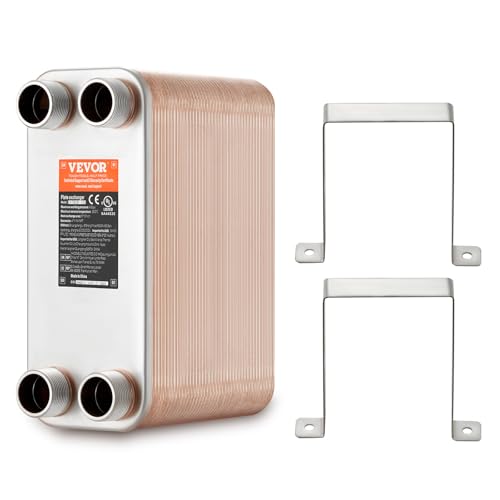
- 80 plates for a large heat exchange area
- 316L stainless with 99% copper brazing
- Includes mounting brackets and leak testing
Best For: Large heating or cooling systems needing high output
Large 20-Plate Hydronic Exchanger

- 5"x12" frame with 20 brazed plates
- 170,000 to 330,000 BTU/hr rating
- 1 1/4" MPT ports for higher-flow systems
Best For: Mid- to large-size hydronic heating systems
30-Plate Water-to-Water Exchanger

- 30 plates in a compact 3"x8" body
- 200,000 to 280,000 BTU/hr range
- 316L stainless with copper brazing
Best For: Compact systems needing extra plate count and output
High-Capacity 5x12 Option
VEVOR 20-Plate Brazed Plate Heat Exchanger

- 20-plate 316 stainless steel construction
- Vacuum-brazed and leak tested
- Made for water-to-water heating applications
Best For: Radiant floor heating, domestic hot water, and snow melting
Compact 3x8 Workhorse
AB 20-Plate Water-to-Water Heat Exchanger

- 3 x 8 in body with 20 brazed plates
- 316L stainless steel and copper brazing
- 130,000 to 180,000 BTU capacity range
Best For: Compact floor heating and domestic water heating systems
High-Output 40-Plate Pick
ALECOIL 4x12 40-Plate Brazed Heat Exchanger

- 40 plates with 418,000 BTU/h capacity
- Fish-bone plate design reduces pressure drop
- 316L stainless steel with copper brazing
Best For: Large hydronic, refrigeration, and high-output heating systems
Compact High-Capacity Pick
AB 4"x12" 40-Plate Water-to-Water Exchanger

- 40 brazed plates for strong heat transfer
- SS316L stainless steel with copper brazing
- Compact 4" x 12" body with 1" MPT ports
Best For: Floor heating, snow melting, and wood-boiler water-to-water use
Heavy-Duty Performance Pick
ALECOIL 5"x12" 50-Plate High-Capacity Exchanger

- 748,000 BTU/h capacity for demanding use
- 50 plates with 15.68 sq. ft. area
- Fish bone plate design helps heat transfer
Best For: Larger hydronic, refrigeration, and cooling applications
Value 30-Plate Option
AB 4"x12" 30-Plate Water-to-Water Exchanger

- 30-plate design in a compact 4" x 12" size
- SS316L stainless steel with copper brazing
- 250,000 to 330,000 BTU/h listed capacity
Best For: Moderate-capacity residential hydronic and snow-melt systems
Compact 26-Plate Heat Exchanger – 3"x8" 26 Plates 3/4" MPT
If you need a compact brazed plate heat exchanger for hydronic jobs, this 3″x8″ 26-plate model is built for efficient heat transfer in a small footprint. Its SS316L construction with copper brazing is aimed at durability, leak resistance, and dependable performance in heating and cooling applications.
Best For: Smaller hydronic systems, floor heating, snow melting, and wood boiler setups where compact size and solid output matter.
Pros:
- 316L stainless steel plates with 99.9% copper brazing for a rugged, leak-resistant build
- Rated for roughly 180,000 to 210,000 BTU/hr depending on application
- 3/4″ MPT connections make it straightforward to hook into compatible systems
- Works across multiple uses, including floor heating, solar heating, and outdoor wood furnaces
Cons:
- Smaller 26-plate design may be less suited to very large heating loads
- Best performance depends on matching the unit to the right application
Overall, this is a practical pick if you want brazed plate heat exchangers with a compact form factor and a wide range of hydronic applications. The 3″x8″ size keeps it easy to fit, while the stated BTU range gives it enough headroom for many residential and light-duty heating jobs.
High-Capacity 80-Plate Unit – EATB28-80 5"x12" 80 Plates
For larger brazed plate heat exchangers needs, this VEVOR 80-plate unit is designed for serious heat transfer in floor heating, water heating, snow melting, and beer cooling. The 5″x12″ plate size, copper brazing, and 316L stainless steel construction are all aimed at high efficiency and long-term reliability.
Best For: Larger systems that need high heat transfer capacity, secure mounting, and broad temperature tolerance.
Pros:
- 80 plates and 5″x12″ size deliver a large heat exchange area
- 316L stainless steel with 99% copper brazing and leak testing for reliability
- High claimed efficiency, with up to 780,000-1,080,000 BTU/hr output
- Includes two 304 stainless steel brackets for stable installation
Cons:
- Higher-capacity design may be more than needed for smaller setups
- Weighs more than compact models, so handling and mounting take more effort
This model stands out if you want a heavy-duty option among brazed plate heat exchangers and need a lot of surface area for transfer. The included brackets and leak testing add confidence, especially when the application calls for dependable performance under demanding conditions.
Large 20-Plate Hydronic Exchanger – 5"x12" 20 Plates 1 1/4" MPT
This larger-format brazed plate heat exchanger is built for hydronic heating, solar heating, snow melting, and similar transfer jobs where higher capacity matters. With a 5″x12″ footprint, 20 plates, and 1 1/4″ MPT connections, it is positioned for systems that need stronger throughput without moving to a much bulkier assembly.
Best For: Mid- to large-size heating systems that need a high-capacity exchanger with bigger ports.
Pros:
- 316L stainless steel construction with 99.9% copper brazing for durability
- Rated for about 170,000 to 330,000 BTU/hr depending on application
- 1 1/4″ MPT ports support higher-flow plumbing setups
- Suitable for hydronic heating, floor heating, wood boilers, and solar heating
Cons:
- Only 20 plates, so performance depends heavily on system match and flow conditions
- Larger connection size may not suit smaller plumbing runs
If your project needs brazed plate heat exchangers with bigger connections and a broader BTU range, this unit offers a balanced mix of size and capacity. It is a sensible choice when you want a compact-to-mid-sized exchanger that can still serve more demanding home-heating applications.
30-Plate Water-to-Water Exchanger – 3"x8" 30 Plates 3/4" MPT
For buyers comparing brazed plate heat exchangers in a compact size, this 30-plate model adds more plate count while keeping the 3″x8″ form factor and 3/4″ MPT connections. It is designed for practical heat transfer in floor heating, water heating, snow melting, and other hydronic applications where a small footprint is still important.
Best For: Compact hydronic systems that need more plate count and a moderate-to-high BTU range.
Pros:
- 30 plates in a compact 3″x8″ design for efficient heat transfer
- 316L stainless steel with 99.9% copper brazing for a durable build
- Rated for about 200,000 to 280,000 BTU/hr depending on application
- Compatible with a range of uses, including floor heating and solar heating
Cons:
- 3/4″ MPT connections may limit use in higher-flow systems
- Compact size is helpful for fit, but not ideal for very large loads
This is a strong option if you want a little more plate count than many compact exchangers without stepping up to a much larger unit. The combination of 30 plates and a modest footprint makes it a practical fit for many residential hydronic jobs.
High-Capacity 5×12 Option – VEVOR 20-Plate Brazed Plate Heat Exchanger
If you need brazed plate heat exchangers for water-to-water heating jobs, this VEVOR model is built for solid transfer performance in a compact form factor. Its 20-plate, counterflow design is aimed at strong turbulence and efficient heat exchange, while the 316 stainless steel construction and vacuum-brazed joints are meant to handle demanding hydronic applications.
Best For: Radiant floor heating, domestic hot water, snow melting, and similar water-to-water systems that need a durable 20-plate exchanger.
Pros:
- 20 316 stainless steel plates with a 5 x 12 in heat transfer area for efficient performance
- High-pressure vacuum brazing and leak testing for dependable sealed operation
- 316 stainless steel build is rated for humid environments and broad temperature ranges
- Suitable for domestic hot water, radiant floor heating, snow melting, wort cooling, and solar heating
Cons:
- Filter installation is recommended
- Not suitable for viscous liquids
- May be more capacity than smaller residential jobs need
This is a practical pick if you want a larger water-to-water exchanger with sturdy construction and broad application coverage. The key strengths are its 20-plate layout, vacuum brazing, and 316 stainless steel build.
Compact 3×8 Workhorse – AB 20-Plate Water-to-Water Heat Exchanger
For buyers comparing brazed plate heat exchangers, this AB unit stands out as a compact water-to-water option with a clear focus on efficient heat transfer. It uses 316L stainless steel plates brazed with 99.9% copper, and the brand positions it as an energy-saving choice for heating and cooling applications without electricity consumption.
Best For: Floor heating, domestic water heating, snow melting, and wood-boiler or zone-heating systems that need a compact exchanger.
Pros:
- 20 brazed plates in a small 3″ x 8″ footprint
- 316L stainless steel with copper brazing for durability and leak resistance
- Rated for 130,000 to 180,000 BTU depending on the application
- Versatile for floor heating, solar heating, district heating, and water heating
Cons:
- Smaller size may not suit higher-demand systems
- Uses 3/4″ MPT connections, which may require matching plumbing
- Listing shows a wide capacity range rather than a single fixed output
This is a strong compact choice if you want a straightforward exchanger for common hydronic and heating jobs. It combines a small footprint with a durable plate-and-brazing design and a broad set of residential and light-duty uses.
High-Output 40-Plate Pick – ALECOIL 4×12 40-Plate Brazed Heat Exchanger
If you need brazed plate heat exchangers for larger hydronic or refrigeration tasks, this ALECOIL model is built around capacity and efficient flow control. It combines 40 plates, a 4 x 12 in format, and an asymmetric fish-bone plate design to create turbulence while reducing pressure drop on the secondary side.
Best For: Larger floor heating, industrial or commercial refrigeration, wood furnaces, and HVAC hydronic systems that call for higher capacity.
Pros:
- 40-plate design with a reported 418,000 BTU/h capacity
- 11.7 sq. ft. heat transfer area in a compact lightweight unit
- Asymmetric fish-bone plates help boost heat transfer and reduce pressure drop
- 316L stainless steel construction with copper brazing in an oxygen-free furnace
Cons:
- 1″ port size may require larger plumbing than smaller residential units
- Higher capacity may be unnecessary for basic household use
- More specialized than simpler water-heating-only exchangers
This ALECOIL unit is the most capacity-focused option in the group, making it a good fit when heat transfer performance matters more than keeping the footprint small. The 40-plate layout and pressure-drop-conscious design are its biggest advantages.
Compact High-Capacity Pick – AB 4"x12" 40-Plate Water-to-Water Exchanger
If you’re comparing brazed plate heat exchangers for hydronic heating, floor heating, or snow melting, this AB unit is built around a compact 4″ x 12″ body with 40 plates and a copper-brazed SS316L construction. The listed capacity range of 350,000 to 380,000 BTU per hour makes it a practical option when you want strong heat transfer in a relatively small footprint.
Best For: Homeowners or installers needing a compact water-to-water exchanger for floor heating, snow melting, or wood-boiler setups.
Pros:
- 40 brazed plates for efficient water-to-water heat transfer
- SS316L stainless steel with 99.9% copper brazing for durability
- Compact 4″ x 12″ size with 1″ MPT ports
- Rated for a wide range of heating applications, including solar and zone heating
Cons:
- Not electric, so it depends entirely on the surrounding heating system
- Best performance will depend on proper sizing for the application
This model stands out if you want a straightforward brazed plate heat exchanger with broad residential and light-duty heating use cases. Its balance of plate count, pressure rating, and compact size makes it a versatile pick for many water-heating jobs.
Heavy-Duty Performance Pick – ALECOIL 5"x12" 50-Plate High-Capacity Exchanger
Among brazed plate heat exchangers, this ALECOIL model is aimed at higher-demand jobs with a 5″ x 12″ frame, 50 plates, and a 1-1/4″ MPT port size. Its notes call out a 748,000 BTU/h capacity, plus an asymmetric fish bone plate design intended to improve turbulence and heat transfer while helping reduce secondary-side pressure drop.
Best For: Larger heating, cooling, or hydronic applications that benefit from higher capacity and a bigger port size.
Pros:
- High 748,000 BTU/h capacity for demanding applications
- 50 plates and a 15.68 sq. ft. heat transfer area
- Asymmetric fish bone plate design for improved heat transfer
- UL-certified series with a 1-year warranty
Cons:
- Bigger footprint than smaller 4″ x 12″ options
- May be more exchanger than needed for simple residential setups
If you need a brazed plate heat exchanger for heavier-duty water heating or industrial-style cooling, this one is built to deliver more surface area and larger flow capacity. The design details suggest an emphasis on efficiency as well as reduced pumping burden on the secondary side.
Value 30-Plate Option – AB 4"x12" 30-Plate Water-to-Water Exchanger
This AB unit is a simpler take on brazed plate heat exchangers, using a 4″ x 12″ layout with 30 plates and 1″ MPT connections. It is listed at 250,000 to 330,000 BTU per hour and is positioned for the same core water-heating jobs, but with a lower plate count than the 40-plate version.
Best For: Buyers who want a compact brazed plate heat exchanger for floor heating, snow melting, or general hydronic use with moderate capacity needs.
Pros:
- 30 brazed plates in a compact 4″ x 12″ body
- SS316L stainless steel with 99.9% copper brazing
- No electricity or oxygen consumption during operation
- Suitable for many residential heating and cooling applications
Cons:
- Lower BTU range than the 40-plate version
- May not suit higher-demand systems that need more capacity
For buyers trying to keep the footprint small while still getting the benefits of a brazed plate heat exchanger, this is a practical middle-ground option. It keeps the same core construction and application range, but with less capacity than the larger AB model.
How We Picked the Best Brazed Plate Heat Exchangers
We focused on the details that matter most in real installations: plate count, port size, material construction, pressure and flow suitability, and how well each unit fits common residential and light commercial use cases. We also favored models with clear sizing signals, since undersizing or oversizing a heat exchanger can reduce performance.
Quick Comparison
Smaller 3"x8" units are typically a better fit for compact hydronic loops or lower-demand transfers, while 4"x12" and 5"x12" models are better suited to higher output systems and larger flows. More plates generally increase heat transfer surface area, but the right choice still depends on your source and load temperatures, pump capacity, and allowable pressure drop.
Key Buying Factors for Brazed Plate Heat Exchangers
Port Size and Connections
Match port size to your piping and expected flow. Common options like 3/4" MPT, 1" MPT, and 1-1/4" MPT can affect installation ease and system resistance. If your plumbing is already set, buying around the piping can simplify the job.
Plate Count and Heat Transfer Area
More plates usually mean more heat transfer capacity, but the ideal count depends on temperature difference and flow rate. A higher plate count can help larger loads, while fewer plates may be enough for smaller zones or tighter spaces.
Material and Corrosion Resistance
Most Brazed Plate Heat Exchangers in this roundup use stainless steel plates with copper brazing, which is common for durability and thermal performance. For water-based systems, material compatibility and water quality still matter, especially if scaling or corrosion is a concern.
Application Fit
Some models are better aligned with floor heating, hydronic heating, snow melting, or water-to-water transfer. Choose based on the actual job rather than size alone, and check whether the unit is intended for domestic hot water, closed-loop hydronics, or separation between systems.
Who Should Buy Which Brazed Plate Heat Exchangers?
If you need a compact solution for a smaller heating loop, a 3"x8" exchanger is often the most practical starting point. For larger residential systems or broader transfer demands, 4"x12" and 5"x12" models usually offer more headroom. Buyers focused on higher output or larger temperature loads should pay close attention to plate count and port size first, then confirm the exchanger fits their pump and piping plan.
If you want the simplest path, start with your required BTU load, then choose a brazed plate heat exchanger that supports that demand with a little margin. That approach helps avoid undersizing while keeping installation and operation manageable.
