If you’re looking to enhance your home’s comfort while cutting down on energy costs, investing in a smart thermostat can be a game-changer. Line voltage smart thermostats are designed specifically for high-voltage heating systems, providing features like programmable settings and energy monitoring. With various options on the market, it’s essential to find the right fit for your needs. Let’s explore the top choices that can bring efficiency and convenience to your living space.
Mysa Smart Thermostat LITE for Electric Baseboard Heaters
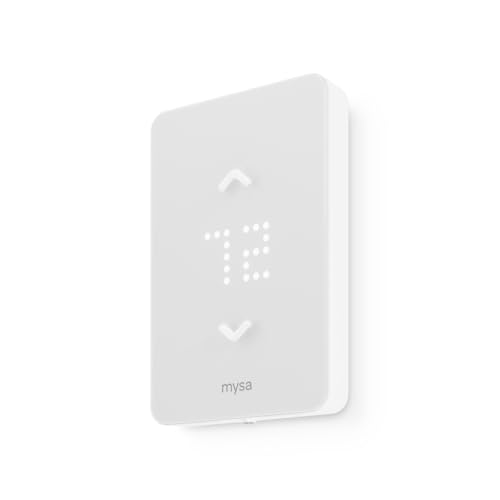
If you’re looking to upgrade your electric baseboard heater system, the Mysa Smart Thermostat LITE is an excellent choice. This thermostat suits various heaters, including wall and fan-forced units, and easily installs in just 15 minutes with the included video guide. You can create custom heating schedules, potentially slashing your heating costs by up to 26%. Plus, with its WiFi capability, you’ll control it from your smartphone or through voice commands via Apple HomeKit, Alexa, or Google Assistant. Designed for durability and backed by a 2-year warranty, it’s perfect for those tricky spaces that need extra warmth.
Best For: Homeowners seeking an energy-efficient solution for electric baseboard heating with smart technology integration.
Pros:
- Easy DIY installation in just 15 minutes with a video guide.
- Potential to reduce heating costs by up to 26% through custom schedules.
- WiFi-enabled for remote access and compatibility with popular voice assistants.
Cons:
- Limited to electric baseboard heaters and similar units only.
- May require a learning curve for users unfamiliar with smart home technology.
- Only a 2-year warranty, which may be shorter compared to other products on the market.
meross Matter Smart Thermostat for Electric Baseboard Heater
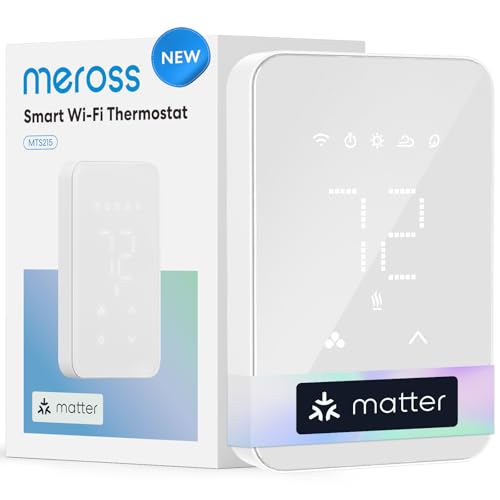
The meross Matter Smart Thermostat for Electric Baseboard Heater stands out as the ideal choice for homeowners with high-line voltage electric heating systems, such as baseboards and convectors. This thermostat offers universal Matter compatibility, allowing you to control it through Alexa, Apple Home, Google Home, and SmartThings. With smart scheduling, you can automate your home’s temperature to save energy and reduce costs. Its open window detection feature pauses heating when needed, while the Meross app lets you track electricity consumption in real-time. Enjoy seamless integration into your smart home ecosystem, enhancing convenience and efficiency effortlessly.
Best For: Homeowners with high-line voltage electric heating systems looking for an efficient and smart control solution.
Pros:
- Universal Matter compatibility allows integration with popular smart home platforms like Alexa, Apple Home, Google Home, and SmartThings.
- Smart scheduling and open window detection features help save energy and reduce heating costs by optimizing temperature management.
- Real-time energy monitoring through the Meross app provides insights into electricity consumption and promotes a lower-carbon lifestyle.
Cons:
- Not compatible with 24V HVAC systems, limiting its use to specific heating systems only.
- Requires a Wi-Fi connection for full functionality, which may not be suitable for all users.
- May involve a learning curve for users unfamiliar with smart home technology or app-based controls.
meross Smart Thermostat for Electric Baseboard and In-Wall Heaters

For homeowners using electric baseboard or in-wall heaters, the meross Smart Thermostat stands out as a top choice due to its compatibility with major smart home systems like HomeKit, Alexa, and Google Home. This thermostat supports high voltage systems, with a maximum output load of 16A, making it ideal for multiple heater types. You can easily install it in under 30 minutes. With features like energy monitoring, open window detection, and extensive scheduling through the Meross app, you’ll efficiently manage your home’s heating while enjoying the convenience of voice control and smart automation. Elevate your comfort effortlessly!
Best For: Homeowners with electric baseboard or in-wall heaters looking for smart home integration and energy-efficient heating solutions.
Pros:
- Supports major smart home systems like HomeKit, Alexa, and Google Home for seamless integration.
- Energy monitoring capabilities help track power usage and promote a low-carbon lifestyle.
- Easy installation in under 30 minutes with a user-friendly app for scheduling.
Cons:
- Requires 4 or more wires for installation, which may not be available in all homes.
- Limited to high voltage systems, excluding compatibility with low voltage heating systems.
- Some features may require additional setup or configuration within the smart home ecosystem.
KING K901-W Hoot WiFi Smart Programmable Thermostat

Looking for a versatile thermostat that can adapt to your home’s heating needs? The KING K901-W Hoot WiFi Smart Programmable Thermostat is your answer. It operates on a single pole, 3-wire system and supports multiple voltages (120/208/240V), making it perfect for various heating systems. With a temperature range of 41º – 90ºF and an accuracy of ±1ºF, you can enjoy precise climate control. Program it easily via the Hoot smartphone app, allowing for up to six customizable time periods daily. Its large touchscreen display and OTA firmware upgrades guarantee it stays up-to-date, providing you with enhanced comfort and efficiency.
Best For: Homeowners seeking a flexible and accurate heating control solution for various electric heating systems.
Pros:
- Versatile Compatibility: Works with baseboard, fan forced, and radiant electric heaters.
- User-Friendly App: Easily programmable through the Hoot smartphone app for personalized heating schedules.
- Large Touchscreen Display: Features a clear, easy-to-read LCD touchscreen for convenient operation.
Cons:
- Wired Installation Required: Requires a 3-wire system, which may not be compatible with all homes.
- Limited Temperature Range: The minimum temperature setting starts at 41ºF, which may not suit all users.
- Dependent on WiFi: Relies on a stable internet connection for smart features, which could be an issue during outages.
Honeywell TL8230A1003 Electric Heat Digital 7 Day Programmable Thermostat
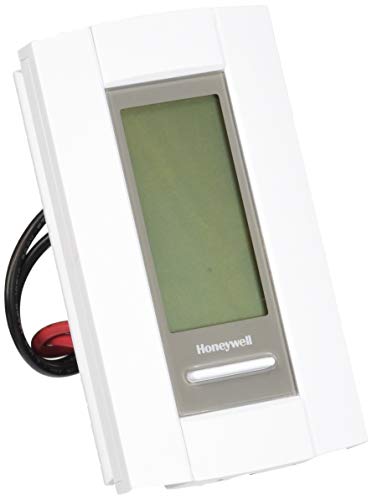
If you want to maximize energy savings while enjoying precise temperature control, the Honeywell TL8230A1003 Electric Heat Digital 7 Day Programmable Thermostat is an excellent choice. With its 7-day programmable schedule, you can tailor your heating to fit your lifestyle, potentially saving up to 20% on energy costs. The electronic temperature control offers a precision of ±1°F, allowing you to save an additional 10% on heating bills. Plus, its soundproofed design guarantees quiet operation, eliminating annoying clicking noises. The large, backlit display makes it easy to read, and the early start functionality assures your desired temperature is reached on time.
Best For: Those looking for an energy-efficient thermostat that offers precise temperature control and quiet operation.
Pros:
- 7-day programmable schedule allows customization to fit individual lifestyles, potentially saving up to 20% on energy costs.
- Electronic temperature control provides precision of ±1°F, further enhancing energy savings.
- Soundproofed design ensures quiet operation by eliminating typical clicking noises of conventional thermostats.
Cons:
- May require a learning curve for some users to fully utilize all programming features.
- Installation may be complex for those without prior experience with thermostats.
- The large backlit display, while easy to read, may be too bright for some users during nighttime.
KING K902-B Hoot WiFi Smart Programmable Thermostat

The KING K902-B Hoot WiFi Smart Programmable Thermostat stands out as an excellent choice for homeowners and businesses seeking precise temperature control in line voltage heating systems. Compatible with 120/208/240V systems, it features a double pole configuration for easy installation. You can program it via the Hoot smartphone app, enjoying OTA firmware upgrades and accurate sensing with a thermistor. The large LCD touchscreen display makes it user-friendly, while the optional maximum temperature lock adds safety. With a temperature range of 41º – 90ºF, you can set 4 or 6 time periods daily for ideal comfort and efficiency.
Best For: Homeowners and businesses looking for precise control over their line voltage heating systems with smart features and easy programmability.
Pros:
- Programmable via smartphone app for convenient temperature management.
- Large LCD touchscreen display enhances usability and accessibility.
- Multi-volt compatibility allows installation in various electrical systems.
Cons:
- Requires a 4-wire installation, which may complicate setup for some users.
- Limited to line voltage systems, not suitable for low voltage or HVAC systems.
- Dependent on WiFi connectivity for full functionality, which may be an issue in areas with poor internet service.
Honeywell TL7235A1003 Non-Programmable Digital Thermostat

For those seeking a reliable and user-friendly option, the Honeywell TL7235A1003 Non-Programmable Digital Thermostat stands out as an excellent choice. Operating on 240 volts, it’s designed for line voltage heating systems, making it versatile for both residential and commercial applications. The user-friendly interface and straightforward installation simplify your experience. Enjoy features like an on-demand backlight for visibility, soundproof operation to eliminate annoying clicks, and a heating indicator that lets you know when the system is active. With electronic temperature control, you’ll achieve precise heating management, ensuring your space stays comfortable and efficient.
Best For: Those seeking a reliable, user-friendly thermostat for line voltage heating systems in both residential and commercial settings.
Pros:
- User-friendly interface simplifies operation and installation.
- On-demand backlight enhances visibility in various lighting conditions.
- Soundproof operation minimizes noise disruption from the thermostat.
Cons:
- Non-programmable feature may limit customization for users who prefer scheduling.
- Only compatible with line voltage heating systems, which may not suit all setups.
- Lacks advanced features found in programmable or smart thermostats.
Mysa Smart Thermostat for Electric In-Floor Heating
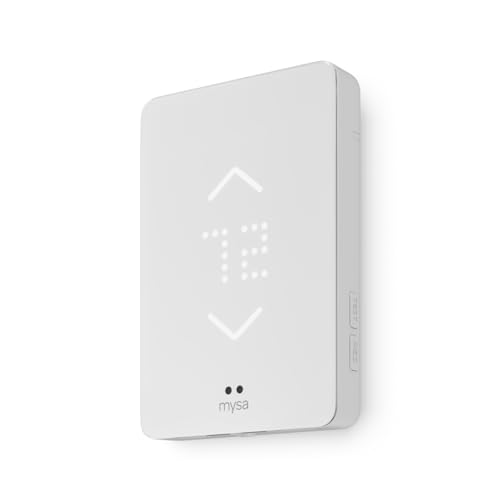
Designed specifically for electric in-floor heating systems, the Mysa Smart Thermostat stands out as the ideal choice for homeowners looking to enhance their heating experience. Operating at 120-240V, it features a built-in Class A GFCI for added safety. This thermostat is compatible with high voltage electric systems, but not hydronic heating. You’ll appreciate its smart features, allowing for WiFi programming and voice control with Alexa, Google Assistant, and Siri. Plus, installation is straightforward, so you can set it up without professional help. Best of all, there are no subscription fees, making it a cost-effective smart home solution.
Best For: Homeowners seeking a smart and safe solution for electric in-floor heating systems.
Pros:
- Easy installation process allows users to set up the thermostat without professional assistance.
- Compatible with major voice assistants such as Alexa, Google Assistant, and Siri for hands-free operation.
- No subscription fees required, making it a cost-effective option for smart home integration.
Cons:
- Not compatible with hydronic or water-based heating systems.
- Limited to high voltage electric systems (120-240V) which may not suit all home heating setups.
- May require a WiFi connection for full functionality, which could be a limitation for some users.
meross Smart Thermostat for Home (WiFi, Works with Alexa, Google Assistant)
If you’re looking for a smart thermostat that seamlessly integrates with your existing HVAC system, the meross Smart Thermostat is an excellent choice. Compatible with 95% of HVAC setups, including heat pumps and furnaces, it supports easy control through Alexa, Google Assistant, and more. You can manage your home’s temperature remotely via the Meross app, ensuring comfort wherever you are. With flexible scheduling, it helps you save energy and reduce bills. Plus, smart alerts keep you informed about filter life and system issues. Installation is a breeze, and its sleek design fits any home decor beautifully.
Best For: Homeowners looking for a versatile and energy-efficient smart thermostat that easily integrates with their HVAC systems and smart home platforms.
Pros:
- Compatible with 95% of HVAC systems, allowing for broad application in homes.
- Remote control and monitoring through the Meross app, providing convenience and flexibility.
- Smart alerts for maintenance needs, ensuring optimal HVAC performance and energy savings.
Cons:
- Not compatible with certain heating systems, such as electric baseboard heaters and millivolt thermostats.
- C wire may be required for some installations, which could complicate setup for some users.
- Dependent on WiFi connectivity, which may affect functionality during outages.
KING K901-B WiFi Programmable Thermostat

The KING K901-B WiFi Programmable Thermostat stands out as an ideal choice for homeowners seeking precise temperature control and modern convenience. This sleek black thermostat is compatible with 120/208/240V systems, making it a versatile option for various heating setups. You can effortlessly program it via the Hoot smartphone app and enjoy OTA firmware upgrades. With a large LCD touchscreen and user-defined maximum temperature lock, controlling your home’s climate is a breeze. It offers a temperature range of 41º – 90ºF and lets you schedule up to six time periods daily, ensuring maximum comfort and efficiency in your living space.
Best For: Homeowners looking for a versatile and modern thermostat with precise temperature control and smart features.
Pros:
- Programmable via smartphone app: Easily adjust your heating schedule from anywhere using the Hoot app.
- Large touchscreen display: User-friendly interface with a clear display for convenient temperature adjustments.
- Flexible scheduling: Program up to six time periods per day for personalized comfort and energy efficiency.
Cons:
- Requires WiFi connection: Smart features depend on a reliable internet connection for full functionality.
- Installation may require professional help: Single pole, 3-wire installation might be challenging for DIY users.
- Limited temperature range: The thermostat operates within a range of 41º – 90ºF, which may not suit all heating needs.
Factors to Consider When Choosing Line Voltage Smart Thermostats
When choosing a line voltage smart thermostat, you need to evaluate several key factors. Compatibility with your heating system, installation ease, and energy efficiency features all play a vital role in your decision. Don’t forget to look at smart home integration and programmability options to guarantee the thermostat fits your lifestyle.
Compatibility With Heating Systems
Choosing the right line voltage smart thermostat hinges on compatibility with your heating system, as these devices are specifically designed for high-voltage setups like electric baseboard, convector, and fan-forced heaters. Ascertain your system operates between 120V and 240V, and verify whether you need a single pole or double pole configuration, as this affects compatibility. Avoid low voltage systems, such as 24V HVAC setups, to prevent installation issues and operational failures. Some thermostats even feature open window detection, pausing heating when a window’s opened, which boosts energy efficiency and saves money. Plus, consider smart thermostats that integrate with ecosystems like Apple Home, Amazon Alexa, or Google Assistant for added convenience and control over your home’s heating.
Installation Requirements and Ease
Understanding compatibility with your heating system sets the foundation for selecting a line voltage smart thermostat, but installation requirements and ease of setup are just as important. Most line voltage thermostats need a 4-wire installation, which you can often complete in under 30 minutes if you’re a DIY enthusiast. Many models replace standard line voltage thermostats without needing a professional electrician, simplifying the process. Look for thermostats with user-friendly apps that offer step-by-step installation guidance. Remember to check if your system uses single pole or double pole configurations, as this affects how the thermostat connects. Finally, verify voltage specifications, typically ranging from 120V to 240V, to guarantee proper installation and functionality.
Energy Efficiency Features
Energy efficiency features are essential to evaluate for line voltage smart thermostats, as they can greatly affect your heating bills. Look for models with scheduling capabilities that let you automate your heating patterns, which can reduce energy usage by up to 26% when set correctly. Open window detection is another valuable feature, pausing heating when a window is detected as open to prevent wasting energy. Energy monitoring tools enable you to track real-time electricity consumption and historical data, helping you understand and improve your energy habits. Finally, programmable temperature ranges and user-defined settings allow for customized heating solutions that match your lifestyle, ultimately leading to increased energy savings.
Smart Home Integration
Evaluating energy efficiency features is just one part of finding the right line voltage smart thermostat. You’ll want to verify compatibility with major smart home ecosystems like Apple HomeKit, Amazon Alexa, and Google Assistant for seamless integration. Look for models that support universal Matter compatibility, enhancing interoperability across various devices.
Mobile app availability is essential, allowing you to manage your heating system remotely, anytime. Voice control capabilities can add convenience, letting you operate the thermostat hands-free. Additionally, check for features like smart scheduling and energy monitoring within the app. These can optimize heating efficiency and provide valuable insights into your energy usage, guaranteeing your home stays comfortable and efficient without the hassle.
Programmability and Scheduling Options
A well-programmed thermostat can greatly enhance your home’s comfort and efficiency. With programmability, you can create custom heating schedules that fit your daily routine, maximizing both comfort and energy savings. Many smart thermostats allow flexible scheduling, offering multiple time periods each day—like four or six—for precise control over your heating patterns. Advanced features often include smart automation that adjusts the heating based on your habits or external factors, such as detecting an open window. Some models even provide visual scheduling interfaces in their apps, making it simple to monitor and modify your plans in real-time. Plus, programming different settings for weekdays and weekends helps guarantee your heating system operates efficiently according to varying occupancy patterns.
User Interface and Display
When choosing a line voltage smart thermostat, the user interface and display play an essential role in your overall experience. A large LCD touchscreen enhances usability, making it easy to see temperature settings and schedules. Look for user-friendly interfaces with digital controls that simplify navigation and programming, helping you adapt quickly. Safety features, like user-defined maximum temperature locks, let you set limits to prevent overheating. On-demand backlighting options guarantee you can read the display in low-light environments. Additionally, consider models with programmable features that allow you to customize heating for different times of the day, providing tailored solutions to suit your lifestyle. A great interface can substantially improve your comfort and control over your home’s heating system.
Durability and Warranty Options
Your experience with a line voltage smart thermostat doesn’t just hinge on its user interface; durability and warranty options are equally important. When selecting a thermostat, consider the durability of its components—high-quality materials enhance longevity and performance. Look for models with UL certification to guarantee reliability in electrical applications. A warranty of at least two years is standard for reputable devices, offering peace of mind against defects or malfunctions. Additionally, sleek, minimalist designs often reflect a focus on aesthetic durability, contributing to your long-term satisfaction. Finally, verify that the manufacturer provides dedicated customer support to address any durability-related issues that may arise during the warranty period, guaranteeing a hassle-free experience with your thermostat.
