When it comes to choosing the best heaters for variable fuel availability, you have a range of options to evaluate. From multi-fuel models to those with impressive heating capacities, it’s essential to find one that suits your specific needs. Safety features and efficiency also play a vital role in your decision. Let’s explore some top contenders that could keep your space warm and comfortable during those colder months.
BILT HARD Portable Kerosene Diesel Heater

If you need a reliable heating solution for large, open spaces like construction sites or workshops, the BILT HARD Portable Kerosene Diesel Heater is a top choice. With a powerful heating capacity of 135,000 BTUs, it effectively warms areas up to 3,200 square feet for up to eight hours. This heater’s versatile fuel compatibility—accepting kerosene, diesel, and jet fuel—ensures you can find the right fuel for your needs. Its sturdy steel design guarantees durability, while features like an adjustable thermostat and self-diagnostics enhance usability. Plus, you’ll appreciate the one-year warranty and responsive customer service if issues arise.
Best For: Those in need of a powerful and portable heating solution for large outdoor areas, workshops, or construction sites.
Pros:
- High heating capacity: Provides 135,000 BTUs, effectively warming spaces up to 3,200 sq. ft.
- Versatile fuel compatibility: Can use kerosene, filtered diesel, fuel oil, and jet fuel for flexibility.
- Durable construction: Made from sturdy steel, ensuring reliable operation in winter conditions.
Cons:
- Limited operational time: Runs for up to 8 hours, which may require frequent refueling for longer use.
- Noise level: Forced air design may produce noticeable noise during operation.
- Requires proper ventilation: Use in enclosed spaces can be hazardous without adequate airflow.
BILT HARD 85,000 BTU Portable Kerosene Diesel Heater
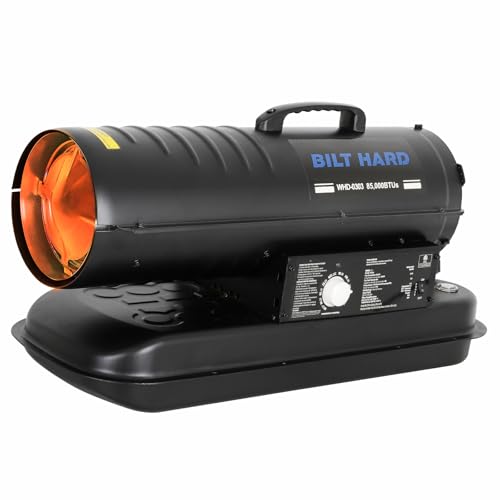
The BILT HARD 85,000 BTU Portable Kerosene Diesel Heater is an excellent choice for those seeking a reliable heating solution in environments with variable fuel availability. This forced air torpedo heater efficiently heats up to 2,200 sq. ft. and runs for up to 9 hours on just 5 gallons of fuel, consuming 0.6 gallons per hour. Its multi-fuel capability allows you to use kerosene, diesel, fuel oil, or jet fuel, with K1 Kerosene recommended for peak performance. Built with sturdy steel, it’s perfect for patios, factories, and utility buildings. Plus, it features an adjustable thermostat and a 1-year warranty for peace of mind.
Best For: Those in need of a versatile and powerful heating solution for large spaces such as patios, factories, and utility buildings.
Pros:
- Multi-fuel capability allows the use of various fuel types for convenience.
- Efficient heating with a capacity of 85,000 BTUs, covering up to 2,200 sq. ft.
- Adjustable thermostat provides customizable temperature control for comfort.
Cons:
- Fuel consumption may be high for smaller spaces, leading to unnecessary fuel use.
- Requires regular maintenance to ensure optimal performance and safety.
- Limited runtime of 9 hours on 5 gallons may necessitate frequent refueling for extended use.
SUNFIRE Radiant Heater – 120,000 BTUs Portable Industrial Heater

For those seeking a powerful and efficient heating solution, the SUNFIRE Radiant Heater stands out with its impressive 120,000 BTUs of heating capacity. This diesel/kerosene portable industrial heater effectively covers up to 2,800 sq ft, making it ideal for various environments. With a 14-gallon tank, you can enjoy approximately 16 hours of runtime. Its odorless operation and quiet performance guarantee it’s suitable for both indoor and outdoor use. Plus, safety features like an automatic shutoff and flame monitoring provide peace of mind. Backed by a 2-year warranty and lifetime technical support, it’s a reliable choice for your heating needs.
Best For: Those needing a powerful and efficient heating solution for large spaces, both indoors and outdoors.
Pros:
- High heating capacity of 120,000 BTUs, covering up to 2,800 sq ft.
- Odorless and quiet operation, making it suitable for various environments.
- Robust safety features including automatic shutoff and flame monitoring.
Cons:
- Requires diesel or kerosene fuel, which may not be readily available in all areas.
- Limited runtime of approximately 16 hours on a full tank may necessitate frequent refueling for extended use.
- The initial cost may be higher compared to smaller, less powerful heaters.
Dura Heat Convection Kerosene Heater (DH2304BB)
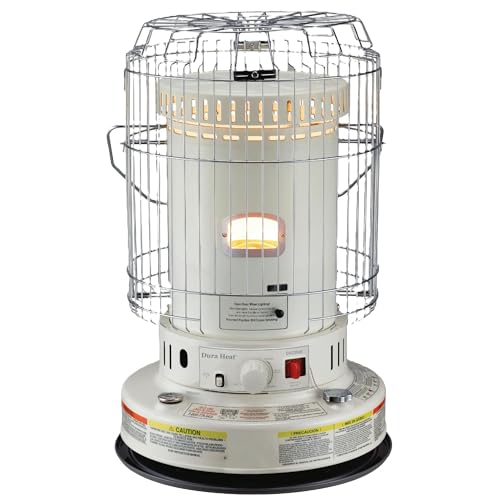
Ideal for those facing unpredictable fuel availability, the Dura Heat Convection Kerosene Heater (DH2304BB) delivers an impressive 23,800 BTU of heat, efficiently warming spaces up to 1,000 square feet. This heater’s user-friendly design features battery-powered ignition and a pinned wick for easy maintenance. It runs up to 12 hours on a full 1.9-gallon tank, complete with a built-in fuel gauge. During power outages or winter emergencies, it provides both heat and light, ensuring safety with its tip-over emergency shut-off and no-lift burner system that minimizes odors. Stay warm and secure with this reliable heating option.
Best For: Those who need a reliable heating solution during power outages or in spaces up to 1,000 square feet.
Pros:
- Efficiently heats large areas with 23,800 BTU output.
- User-friendly features include battery-powered ignition and pinned wick for easy maintenance.
- Offers safety features like a tip-over emergency shut-off and no-lift burner system to minimize odors.
Cons:
- Requires kerosene fuel, which may not always be readily available.
- Can produce fumes, necessitating proper ventilation in enclosed spaces.
- Limited runtime of 12 hours may require frequent refueling during extended use.
30,000 BTU Vent Free Radiant Dual Fuel Heater
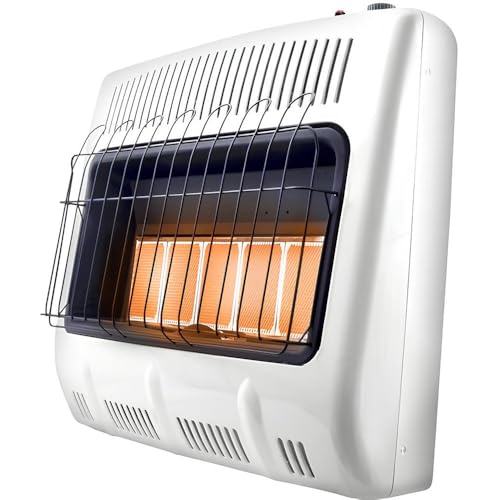
When it comes to heating spaces up to 1,000 square feet, the 30,000 BTU Vent Free Radiant Dual Fuel Heater stands out as a top choice for those dealing with variable fuel availability. It operates on propane or natural gas, giving you flexibility in fuel options. The battery-operated electronic spark ignition means you won’t need electricity for operation, making it perfect for emergencies. Safety features like the low oxygen shut-off system guarantee peace of mind indoors. With a built-in adjustable thermostat, you can easily maintain your desired temperature. Consider adding the blower fan kit for enhanced heating efficiency.
Best For: Those seeking an efficient and flexible heating solution for spaces up to 1,000 square feet, especially in areas with variable fuel availability.
Pros:
- Versatile Fuel Options: Compatible with both propane and natural gas, providing flexibility based on availability.
- No Electricity Required: Battery-operated ignition allows for operation even during power outages, making it ideal for emergencies.
- Safety Features: Equipped with a low oxygen shut-off system, ensuring safe indoor use.
Cons:
- Blower Fan Kit Sold Separately: Enhanced heating efficiency requires an additional purchase, which may increase overall cost.
- Limited to Indoor Use: Not suitable for outdoor spaces, restricting its usability in certain environments.
- Vent Free Design: While convenient, vent-free systems may not be ideal for everyone due to potential air quality concerns.
Forced Air Heater, 80,000 BTU Multi-Fuel for Workspaces & Outdoor Use

With an impressive heating capacity of 80,000 BTU, the Forced Air Heater is perfect for anyone needing reliable warmth in large spaces, whether it’s a workshop or an outdoor construction site. It efficiently heats areas up to 2,000 sq ft, guaranteeing comfort wherever you are. Its multi-fuel compatibility means you can use K-1 kerosene, diesel, or even jet fuel, making it versatile for varying fuel availability. The high-performance motor and powerful fan provide rapid heating, while built-in safety features like flame-out shut-off and overheat protection guarantee safe operation. This heater meets all your heating needs effectively and safely.
Best For: This Forced Air Heater is best for professionals and DIY enthusiasts needing efficient heating in large workspaces or outdoor construction sites.
Pros:
- Multi-fuel compatibility allows for flexibility in fuel choice, accommodating various availability.
- High heating capacity of 80,000 BTU effectively warms areas up to 2,000 sq ft.
- Safety features like flame-out shut-off and overheat protection ensure secure operation.
Cons:
- May require regular maintenance to ensure optimal performance.
- Fuel costs can vary significantly depending on the type used.
- Heavier and bulkier design may limit portability compared to smaller heaters.
InoKraft 210,000 BTU Kerosene Forced Air Heater

The InoKraft 210,000 BTU Kerosene Forced Air Heater is a powerhouse for anyone needing reliable heat in expansive spaces, covering up to 5,250 square feet. With a 13.5-gallon fuel tank, you get up to 8.5 hours of warmth, making it ideal for warehouses, construction sites, and barns. Its ergonomic support frame and upgraded swivel wheels guarantee easy transport. Safety’s a priority, featuring built-in overheat protection and an auto shut-off at 239°F. Plus, the adjustable thermostat lets you control temperatures from 23–99°F. Compatible with various fuels, you can count on the InoKraft for versatile, effective heating.
Best For: The InoKraft 210,000 BTU Kerosene Forced Air Heater is best for individuals or businesses needing efficient heating solutions for large spaces like warehouses, construction sites, and agricultural areas.
Pros:
- Powerful heating capability covering up to 5,250 sq. ft.
- Portable design with ergonomic support frame and swivel wheels for easy transport.
- Versatile fuel compatibility, allowing usage with various kerosene and diesel types.
Cons:
- Limited runtime of up to 8.5 hours may require frequent refueling for extended use.
- Requires proper ventilation due to kerosene combustion.
- Heavier than smaller portable heaters, which may affect mobility for some users.
30,000 BTU Vent Free Blue Flame Dual Fuel Heater

For those seeking a reliable heating solution in spaces where fuel availability can fluctuate, the 30,000 BTU Vent Free Blue Flame Dual Fuel Heater stands out. It efficiently heats up to 1,000 sq. ft. without needing electricity, thanks to its battery-operated electronic spark ignition. You can easily switch between liquid propane and natural gas, ensuring versatility in fuel options. Safety features like low oxygen detection and a shut-off system provide peace of mind. With a built-in adjustable thermostat, you can maintain your desired temperature. Consider adding a blower fan kit for enhanced heat distribution.
Best For: Individuals or families looking for an efficient and versatile heating solution in large indoor spaces without the need for electricity.
Pros:
- Efficiently heats spaces up to 1,000 sq. ft., making it suitable for larger rooms.
- Dual fuel capability allows users to switch between liquid propane and natural gas based on availability.
- Safety features, including low oxygen detection and shut-off systems, enhance overall user safety.
Cons:
- Requires a separate purchase of a blower fan kit for improved heat distribution.
- Vent-free design may not be suitable for all users due to potential air quality concerns.
- Battery-operated ignition may require occasional battery replacement.
VEVOR 45000 BTU Portable Kerosene Diesel Heater

Need a reliable heating solution that adapts to your fuel availability? The VEVOR 45000 BTU Portable Kerosene Diesel Heater is your answer. With a powerful output and 450 m³/h airflow, it heats spaces up to 260㎡, delivering warmth in just 15 minutes. The quick-start switch makes ignition effortless, and you won’t need manual lighting. Its 19L tank allows for up to 56 hours of operation at a low consumption rate of 0.34 gal per hour. Compatible with both kerosene and diesel, it’s perfect for job sites, garages, and outdoor heating, while its portability guarantees easy movement.
Best For: Those in need of an efficient and portable heating solution for large spaces such as job sites, garages, and workshops.
Pros:
- Quick-start switch allows for effortless ignition without manual lighting.
- Long operational time of up to 56 hours with a 19L tank.
- Compatible with both kerosene and diesel, offering flexibility in fuel choice.
Cons:
- Requires access to kerosene or diesel fuel for operation.
- May emit some noise during operation, typical of portable heaters.
- Limited to heating large spaces and may not be suitable for smaller areas.
10,000 BTU Kerosene Heater for Indoor Use

If you’re looking for a reliable heating solution during power outages or winter emergencies, the 10,000 BTU kerosene heater stands out with its ability to provide instant warmth without the need for electricity. This portable heater effectively warms spaces from 200 to 350 square feet, making it ideal for various indoor settings. With a 1.35-gallon tank, you’ll enjoy 15 to 21 hours of continuous heat. Safety features like a protective net and solid base prevent tipping, while a real-time fuel gauge keeps you informed. Plus, the top doubles as a cooking surface, offering added versatility for your needs.
Best For: Those seeking a portable and reliable heating solution for indoor spaces during power outages and winter emergencies.
Pros:
- Portable design allows for easy movement between different locations.
- Long runtime of 15-21 hours provides extended warmth without frequent refueling.
- Dual functionality with a cooking surface adds versatility for heating food or boiling water.
Cons:
- Requires kerosene fuel, which may not be readily available for everyone.
- Potential safety concerns if not monitored closely, despite built-in safety features.
- Limited heating range may not be sufficient for larger spaces beyond 350 square feet.
Factors to Consider When Choosing Heaters for Variable Fuel Availability
When choosing a heater for variable fuel availability, you need to take into account several key factors. Fuel compatibility, heating capacity, and portability can greatly influence your decision. Additionally, safety features and efficiency will guarantee you get the best performance for your specific needs.
Fuel Compatibility Options
How do you choose the right heater when fuel availability can fluctuate? Start by looking for multi-fuel compatibility. Many heaters can run on kerosene, diesel, fuel oil, or jet fuel, giving you flexibility based on what’s available. Pay attention to the manufacturer’s recommendations; some heaters perform best with specific fuels like K1 kerosene, which enhances efficiency and reduces maintenance. Also, consider fuel consumption rates—some heaters use as little as 0.34 gallons per hour, extending your heating time on limited supplies. Finally, check the tank capacity and run time. You’ll find options ranging from small tanks for a few hours to larger ones that provide over 16 hours of continuous heating, ensuring you stay warm when it matters most.
Heating Capacity Requirements
Choosing a heater with variable fuel availability means paying close attention to heating capacity requirements. First, determine the BTUs needed to effectively warm your space; options range from 10,000 BTUs for small areas to 210,000 BTUs for larger warehouses. Assess the square footage coverage, as heaters can cover areas from 200 to 5,250 square feet—make sure the model fits your specific dimensions. Don’t forget to evaluate operational efficiency; some heaters consume fuel at rates from 0.34 to 0.85 gallons per hour. Additionally, consider run time on a full tank, with some models providing heat for up to 56 hours. Finally, match the heater’s output to the fuel type available for maximum performance.
Portability and Transportability
Portability and transportability are essential factors in selecting heaters with variable fuel availability, especially if you need to move them frequently between job sites. Look for models with ergonomic support frames and swivel wheels to make transportation effortless. The weight of the heater matters; lighter units are easier to maneuver, particularly in outdoor or construction settings. Features like top handles enhance transportability, allowing you to lift and relocate the heater without assistance. Also, consider the fuel tank capacity; larger tanks mean longer run times without frequent refueling, adding convenience during use. Finally, designs with quick-start ignition systems simplify operation, reducing the hassle of manual lighting and improving overall portability.
Safety Features Consideration
When selecting a heater with variable fuel availability, safety features play an essential role in guaranteeing safe operation, especially in diverse environments. Look for models with a low oxygen safety shut-off system to prevent hazardous conditions in enclosed spaces, particularly when using fuels like propane or natural gas. Automatic shutoff features, such as a tip-over switch, are critical for preventing accidents and fires. Additionally, heaters with built-in flame monitoring systems can shut down the unit if the flame goes out or deteriorates. Overheat protection mechanisms are also important, turning off the heater at unsafe temperatures. Finally, verify the heater has a sturdy construction and solid base to minimize tipping risks in high-traffic areas.
Efficiency and Run Time
Efficient heating is vital, especially in environments with variable fuel availability, as it directly impacts comfort and operational costs. When choosing a heater, pay attention to its BTU rating; higher BTUs mean quicker heating for larger areas. This efficiency is important when fuel sources fluctuate. Additionally, consider fuel consumption rates—some heaters may use just 0.34 gallons per hour, extending their run time considerably. A model with a larger fuel tank can run for up to 56 hours on a single fill, minimizing refueling interruptions. Finally, the type of fuel matters; cleaner-burning fuels enhance efficiency and safety, reducing odors and improving overall performance. Choose wisely to guarantee you meet your heating needs effectively.
Indoor Versus Outdoor Use
Choosing the right heater for variable fuel availability requires careful consideration of whether you’ll use it indoors or outdoors. Indoor heaters need essential safety features like low oxygen shut-off systems and tip-over protection to prevent hazards. They often operate without electricity, making them reliable during power outages. In contrast, outdoor heaters can achieve higher BTU outputs, effectively warming larger areas such as patios or construction sites. They can handle a variety of fuel types without affecting indoor air quality. While some outdoor models heat spaces up to 5,250 square feet, indoor units typically cover around 1,000 square feet. Ultimately, your choice should align with your specific heating needs and the environment where you plan to use the heater.
